2027 Joint Meetings - Plenary Speakers
-
![Paul Blanchard]()
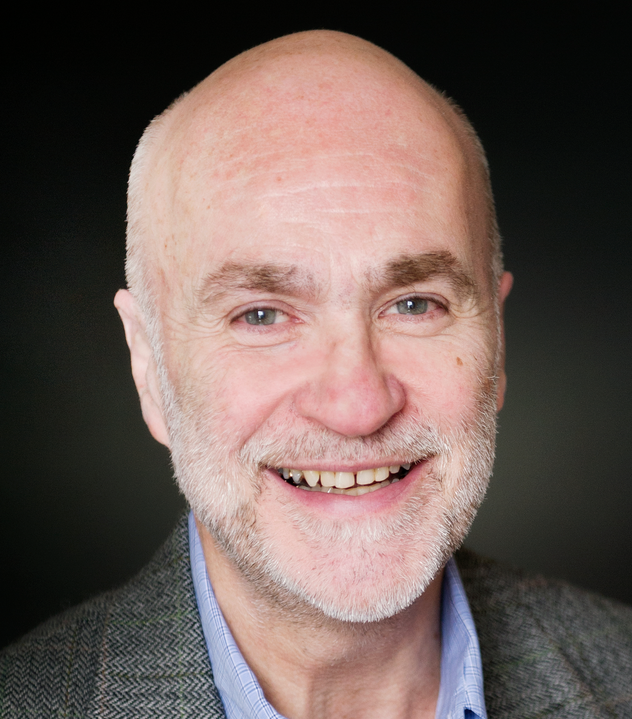
Paul Blanchard
Boston University (Emeritus)
Department of Mathematics and Statistics
Treasurer, MAAPaul Blanchard grew up in Sutton, Massachusetts. He spent three years in college at Brown University. Then he decided to have an adventure and learn a new language, so he spent his last year as an undergraduate at the University of Warwick in England. He received his Ph.D. from Yale University in 1978.
He taught collegiate mathematics for 46 years, mostly at Boston University where he is currently Professor Emeritus of Mathematics. He is also the Treasurer of the MAA , at least for the next 2.5 years.
In 2001, he won the Northeast Section of the MAA’s Award for Distinguished Teaching of Mathematics. In terms of his teaching, he is best known for the textbook that he wrote with Robert L Devaney and Glen R Hall. This text discusses studying solutions to ordinary differential equations using qualitative, numeric, and analytic approaches.
His main area of mathematical research is complex analytic dynamical systems and their related point sets, i.e., Julia sets and the Mandelbrot set. He is an inaugural fellow of the AMS.
When he is not thinking about mathematics or teaching mathematics, he likes to play golf, and his golfing buddies readily agree that he is not terrible.
Talk Title: Newton’s Method: Complex Numerics and Complex Dynamics
Abstract:
Newton’s method is an iterative root-finding algorithm that is both simple and surprisingly efficient. We start with an initial guess for the root and apply the algorithm repeatedly until we obtain the desired approximation. Unfortunately, a random guess does not always lead to a root. In this talk, we use the theory of complex dynamics along with some computer graphics to explain the difficulties that might arise, and we suggest ways to avoid these pitfalls. As the story unfolds, we encounter both chaos and fractals.
-
![Lauren Keough]()
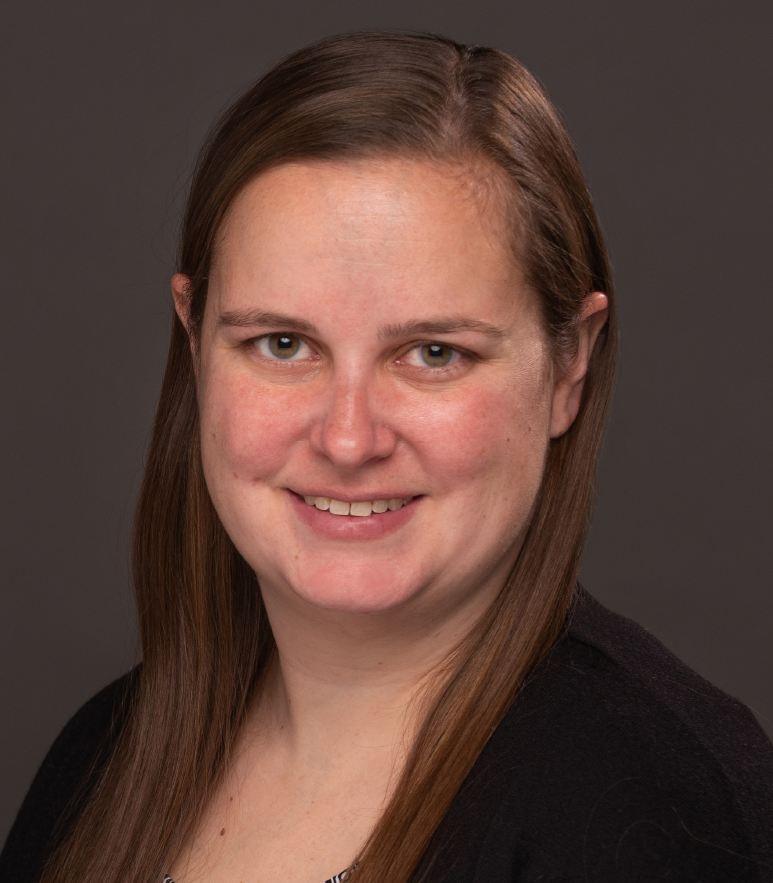
Lauren Keough
Grand Valley State University
Department of Mathematics
AWM SpeakerLauren Keough is an associate professor in the Department of Mathematics at Grand Valley State University. Her favorite activities as a child in Rhode Island were those that allowed room for creativity, so, at first, she wasn’t a huge math fan. In fact, when she used her creativity to find patterns to do timed multiplication tests, she thought she was cheating. Her love for math started to develop as an undergraduate at Hofstra University where she learned she could be creative in her math courses. Lauren completed her PhD in 2015 at the University of Nebraska – Lincoln under the supervision of Dr. Jamie Radcliffe. Her PhD research is in extremal graph theory, and she especially loves areas where she can involve undergraduates. After graduate school, Lauren spent a year at Davidson College as a visiting assistant professor before moving to Grand Valley State University (GVSU) in 2016. At GVSU, Lauren strives to meet the needs of all undergraduates. She spreads her love of math by mentoring undergraduate research, hosting math circles, and teaching as many different courses as possible. Beyond math, Lauren likes to do crossword puzzles and is learning to embrace winter sports.
Talk Title: Math Circle Magic for All
Abstract:
One of my favorite ways to interact with people is through doing problems that people don’t always think of as “math”. I believe that one of the reasons to still do math in the age of AI is for joy. But not enough people think of math as joyful! I’ve led math circles at GVSU for several years, and in this talk, we’ll explore a math circle created from a magic trick a student shared with me. This will be an interactive talk where audience members get to discuss their math ideas with each other and will (hopefully) get to leave with a new discovery of their own. I’ll also share other examples of math circles, a bit about my teaching philosophy, and ways you might spread the joy.
-
![]()
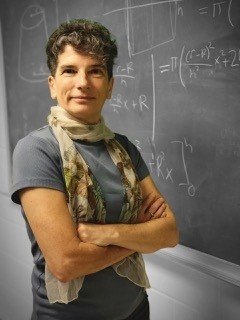
Natasha Jonoska
University of South Florida
Department of Mathematics and Statistics
Distinguished ProfessorNatasha Jonoska is a Distinguished Professor at the Department of Mathematics and Statistics at University of South Florida in Tampa Florida. Her research interests are in theoretical and computational models of molecular self-assembly and molecular biology. She has had extensive research collaborations with experimentalists in molecular biology and structural DNA nano technology. She holds a PhD degree in Mathematical Sciences from the State University of New York in Binghamton NY, USA and since 2014 she is a Fellow of the American Association for the Advancement of Science. Her work on three-dimensional DNA self-assembly as computing models has been awarded with a Rozenberg Tulip Award in DNA Computing and Molecular Programming by the International Society for Nanoscale Science and Computing. Her work has been/is supported by the National Science Foundation (NSF), National Institute of Health, the W.M. Keck Foundation and she was a Simons Fellow in Mathematics in 2022. For ten years she served as a Chair of the annual DNA Computing and Molecular Programming conference and co-chaired the annual Unconventional Computing and Natural Computing conference. She also serves on editorial boards of several journals including Theoretical Computer Science, Natural Computing, Computability, International Journal of Foundations of Computer Science, and has edited nine books on these topics. In 2021 the Florida section of Mathematical Association of America awarded her with the MAA award for Distinguished College or University Teaching of Mathematics.
Talk Title: Chirality Across Scales: From DNA Building Blocks to Three-Dimensional Nanostructures
Abstract:
Preferred handedness—known in science as chirality—is everywhere in nature. Natural DNA forms a right-handed double helix, while amino acids favor a left-handed orientation. Understanding how nature self-amplifies these specific shapes won the 2026 Nobel Prize in Chemistry. Today, using DNA self-assembly, we can design custom molecular building blocks that stack into complex 3D structures with multiple layers of chirality—from individual strands up to the overall architecture. How do we mathematically model and control these structural twists? Drawing on experimentally validated designs and assembly strategies, we will examine how chirality can be seen across scale within the geometry of larger structures. Our goal is to illustrate how mathematical reasoning can help us understand and design complex structures from the bottom up.